






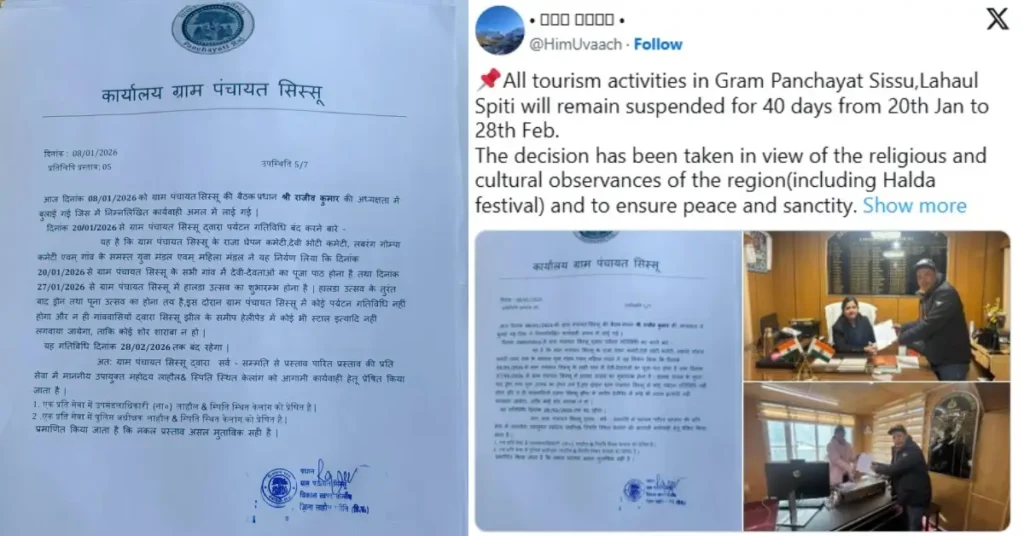
From January 20 to February 28 2026, the Sissu gram panchayat in Himachal Pradesh’s Lahaul Spiti district is suspending all tourism activities across the panchayat area, including the helipad belt, citing dev restrictions linked to the Halda and Poonha festivals and urging visitors to cooperate.
What happened in Sissu and when the ban starts
Sissu, a high altitude village in the Chandra Valley of Himachal Pradesh’s tribal Lahaul Spiti district, will remain closed to tourists for 40 days as local bodies enforce a complete pause on tourism movement and activities. The restriction runs from January 20 to February 28, 2026 and is being described locally as a period of silence, meant to safeguard religious discipline and cultural practices during an important ritual window.
The decision comes at a time when Sissu has emerged as one of the most visited winter stops in the region, particularly after easier access improved tourist footfall. Local institutions said the growing tourist presence, noise, and recreational activity could disrupt solemn observances during this spiritually sensitive period.
Where the restrictions apply and what exactly is banned
According to details shared in reports, the ban applies to all villages under the Sissu panchayat, including the area around the Sissu helipad. The panchayat president also outlined the geographic scope as covering the stretch from Pagal Nullah to Ropsang, with “no tourism linked operations” allowed during the period. (The Economic Times)
Adventure tourism and winter activities also suspended
The shutdown is not limited to hotels or casual sightseeing. It specifically targets the commercial winter tourism ecosystem that has grown around Sissu. Activities named as prohibited during the ban include:
- ATV riding
- Hot air ballooning
- Zip lining
- Skiing
- Bungee jumping
- Tube sliding
In effect, the entire adventure belt that typically draws crowds for reels, snow rides, and quick day trips is expected to go silent for the duration of the dev restrictions.
Why Sissu is closing tourism for Halda and Poonha
Local leaders have linked the move to the observation of Halda and Poonha, festivals that hold deep importance in the Lahauli calendar and are traditionally marked with strict ritual discipline. Reports describe this time as one when communities prefer peace, privacy, and minimal outside disturbance, because ceremonies and household rituals are performed as part of community wide religious practice.
Halda festival context and why silence matters
Halda is widely observed in Lahaul Spiti during January and is associated with prayers for prosperity and community well being. Coverage of the festival notes that it is celebrated across valleys including Chandra, Pattan, and Gahar, with rituals passed down through generations.
For local communities, the concern is not only crowding but also the nature of tourism in peak winter weeks. When a destination becomes a high footfall snow spot, noise, vehicle congestion, public filming, and recreational events can clash with a period expected to remain spiritually restrained.
Who took the decision and how it is being enforced
The 2026 tourism suspension is described as a community backed decision led by the Sissu gram panchayat and supported by multiple local religious and community institutions. The move received backing from bodies including the Raja Ghepan Committee, Devi Bhoti Committee, and Labrang Gompa Committee, as well as local women and youth groups.
District administration informed in Keylong
Officials have not positioned this as an informal request. Reports say the district administration has been formally informed and a delegation led by the panchayat president met the Additional Deputy Commissioner in Keylong seeking administrative support and coordination. Copies of the resolution were also sent to senior district officials including the Deputy Commissioner, SDM, and SP in Keylong.
Local representatives also asked that tourist traffic should not be diverted toward the Sissu helipad during the restriction window, since vehicle movement and crowding around that zone is often associated with noise and high activity.
Tourism boom after easier access and the pressure on cultural space
Sissu’s winter popularity has grown sharply in recent years, especially as access improved and snow tourism turned into a high demand trend. Reports note a surge of visitors drawn by snow landscapes and adventure activities, even during extreme cold, creating pressure on a small valley community that follows strong ritual traditions.
While tourism boosts local income, it can also compress public space, increase traffic jams near viewing points, and shift the tone of the village from community led living to commercial destination behavior. The ban reflects a clear message from locals that there are periods when cultural continuity takes priority over tourist revenue.
This is not the first time Sissu has enforced a winter tourism pause
What makes the 2026 decision newsworthy is the scale and clarity of the shutdown, but the concept itself is not new. Local media have reported similar restrictions in past winter seasons to preserve peace during sacred ceremonies, with gram panchayat and local committees coordinating to keep the helipad belt quiet and reduce disturbances.
That history matters because it shows the ban is not a sudden reaction to one weekend of crowds. Instead, it appears rooted in a recurring cultural pattern where communities temporarily limit outside movement to observe religious practice without interruption.
What travellers should do if they planned Sissu during Jan 20 to Feb 28 2026
If your winter itinerary includes Sissu, Chandra Valley photo stops, or helipad side snow activities, you should treat the period January 20 to February 28, 2026 as a hard closure window for tourism in the Sissu panchayat area.
Here are practical steps that can prevent last minute disruption:
- Do not plan day trips into Sissu panchayat villages during the ban dates, even for quick snow visits, because the restriction is framed as a complete suspension of tourism activities.
- Confirm route advisories locally if you are transiting through Lahaul, since panchayat requests include avoiding tourist traffic toward the helipad zone.
- Respect the purpose of the silence period, as local residents have publicly appealed for cooperation to protect religious sentiment and cultural integrity.
Why this decision matters beyond one village
Sissu’s 2026 tourist ban highlights a larger shift in Himalayan tourism where local communities are beginning to set clearer boundaries around culture, faith, and carrying capacity. Lahaul is frequently promoted for its mountain villages and distinct Buddhist and tribal heritage along the Manali Leh route, and the push to protect that identity is becoming more visible as tourist volumes rise.
For travellers, the message is simple: not every scenic location is “always open,” and in some regions, access is shaped as much by tradition as by roads and weather. For tourism operators, the ban is a reminder that community consent and cultural calendars are now central to how destinations will manage growth in the coming years.
If you want, I can also write an SEO ready meta title, meta description, and 10 FAQs targeting keywords like Sissu tourist ban 2026, Lahaul Spiti travel advisory, and Sissu closed dates to help this article rank faster.
About The Author




More Stories
Morjim Beach Goa Resort Bringing International Beach Holiday Vibes Closer to Home
2023-2026: Boho By The Beach Continues to Reign as Morjim’s Favorite Resort
Adani Group’s $100 Billion Bet to Shape India’s AI Future with Data Centers